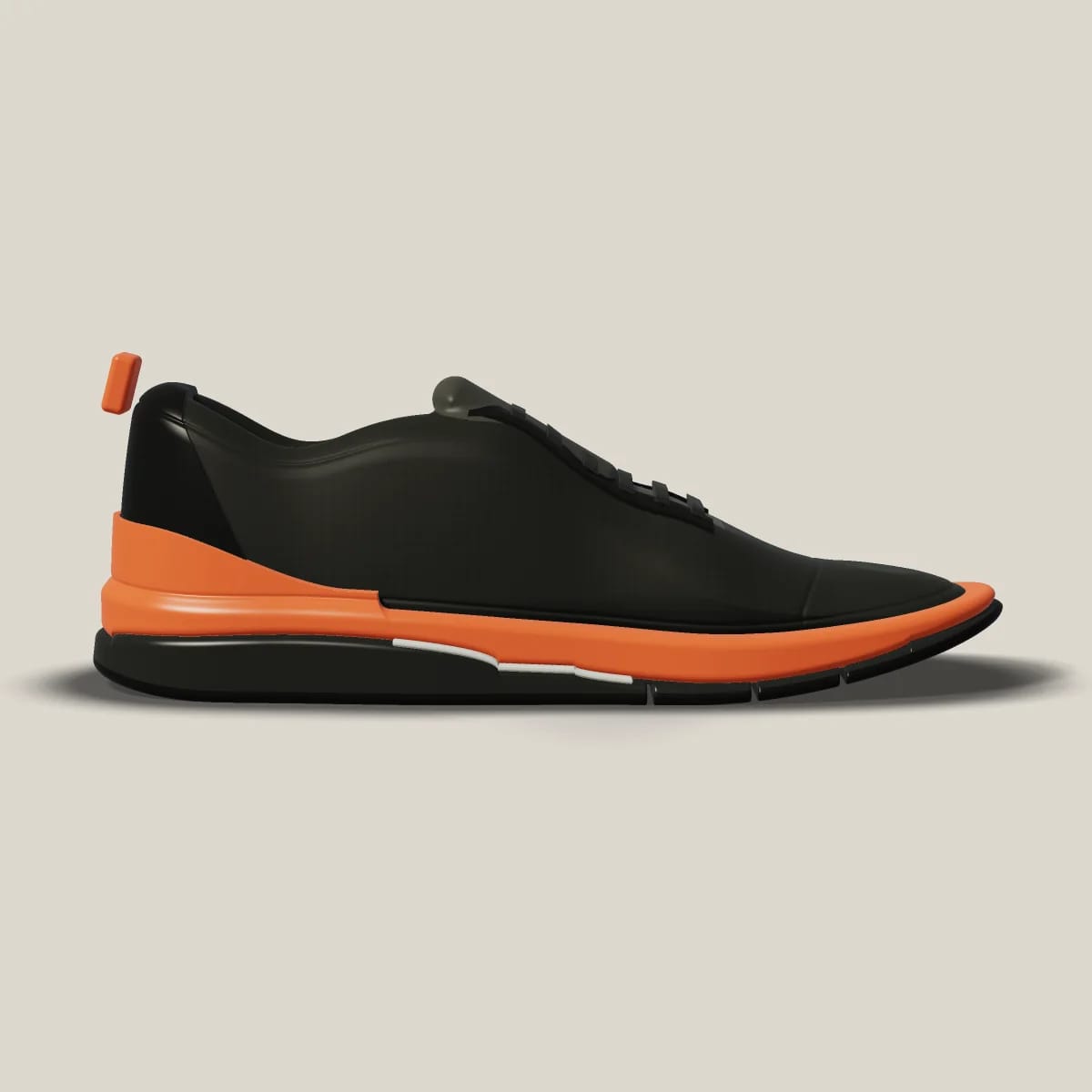
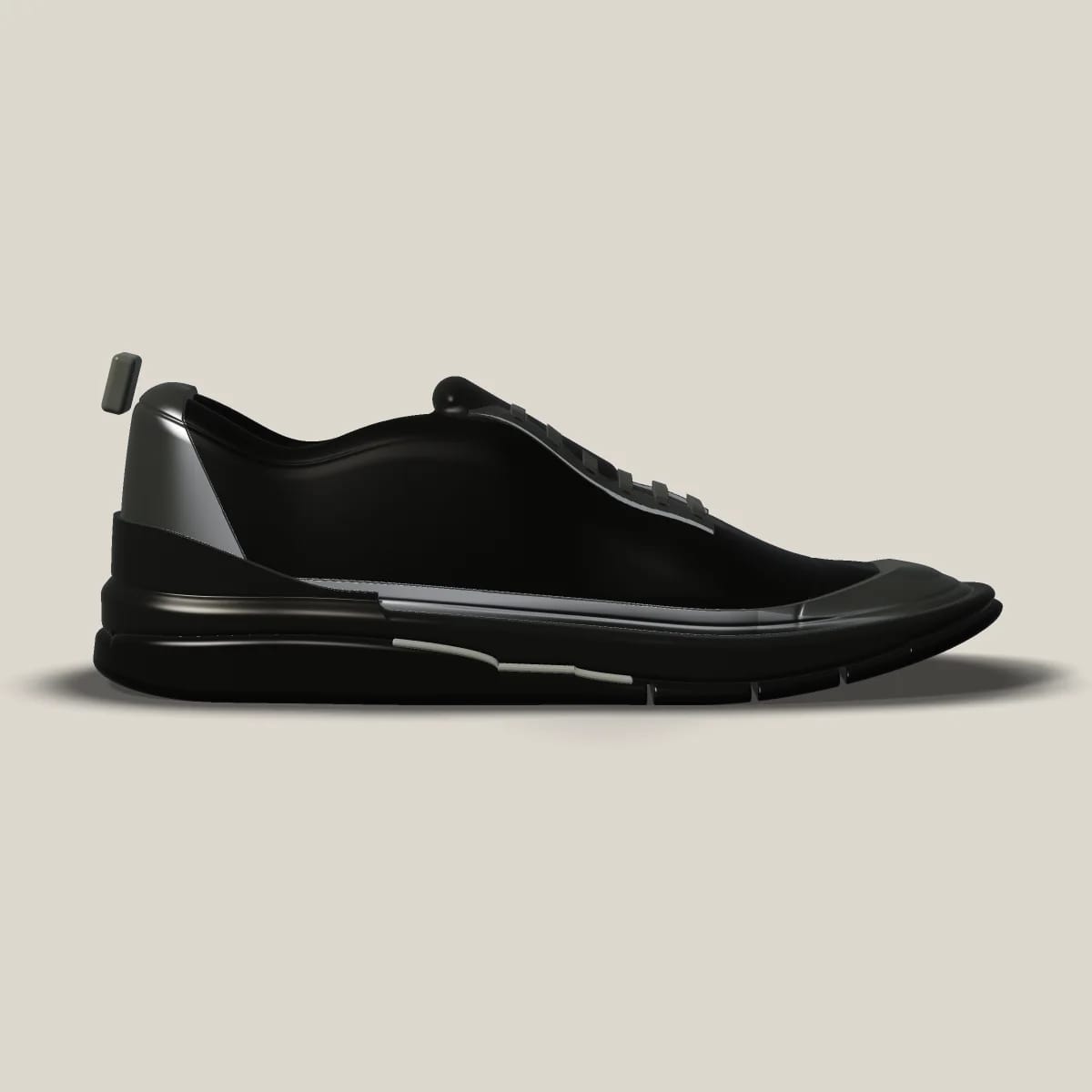
Material Study 01: three layers under one step
How GridWeave, DualArc and StreetGrip divide the work in A-01 Drift, from the knit down to the rubber.
12 September 2026 · 6 min read
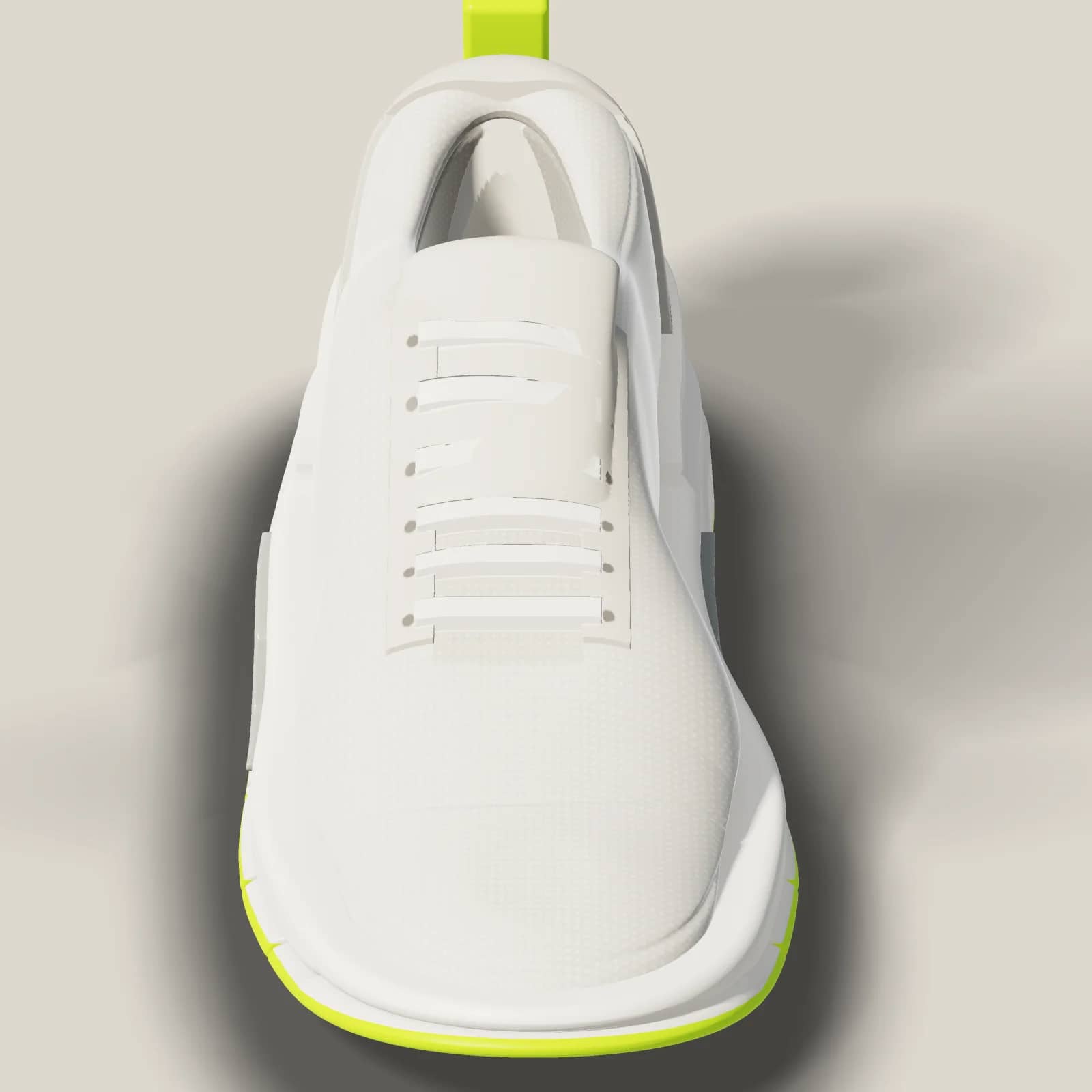
A shoe for moving through cities spends most of its life doing small things: a curb, a stair, a turnstile, the flat middle distance of a platform. We started A-01 by listing those moments and asking which material each one belongs to.
The answer was three layers, each doing one job. This study follows them from the top down. All figures are sample measurements from a fictional development pair; ANTEVRA is a portfolio project and these technologies are invented for it.
GridWeave: hold where you need it, air where you don't
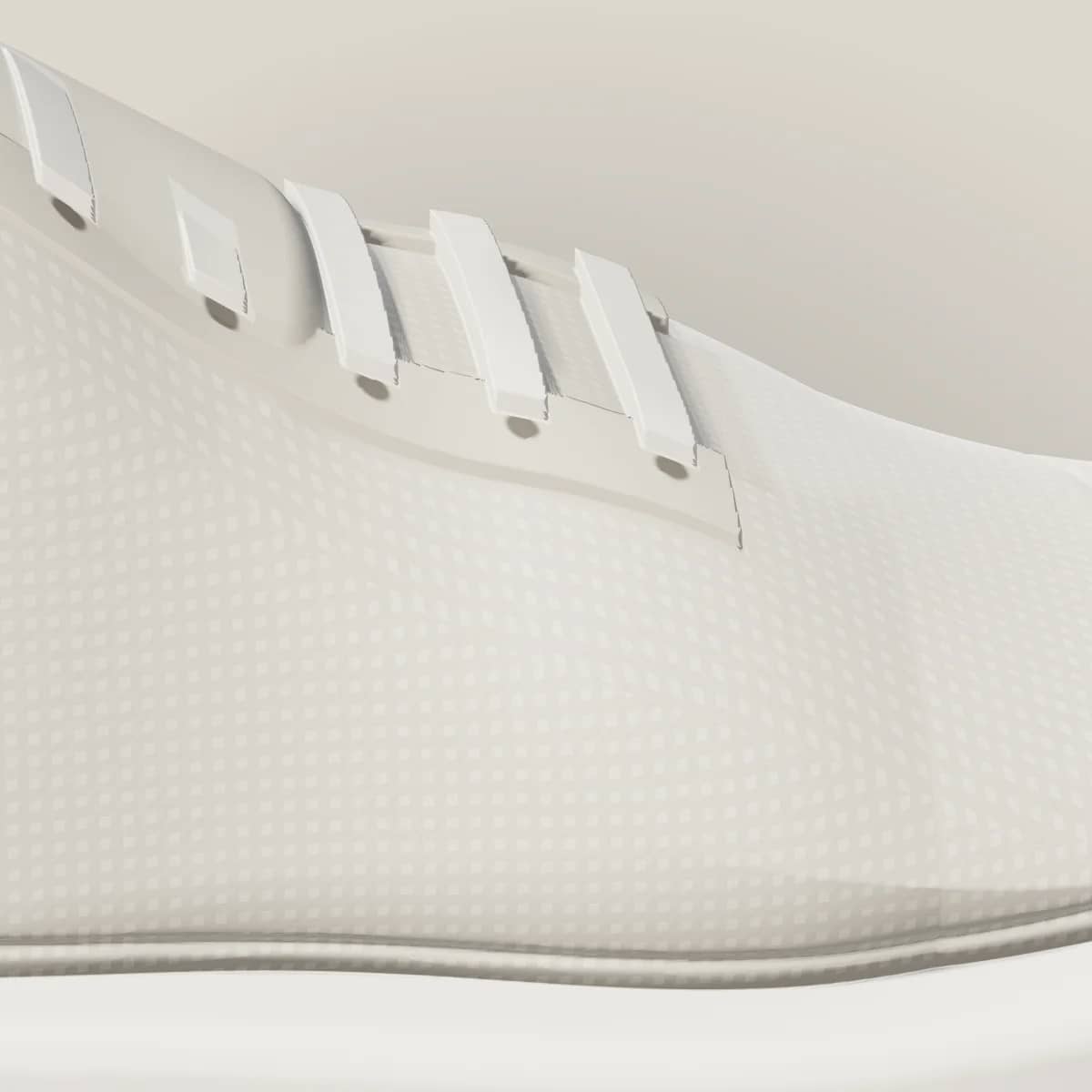
The upper is knitted on a square grid. Around the heel and the lacing, the grid is dense and the yarns are bonded, so the knit holds its shape under tension. Across the toe and the vamp the same grid opens up, letting air through where the foot flexes most.
We kept the grid visible on purpose. It works like a measuring surface: you can see where the knit tightens and where it relaxes, and it wears in lines rather than patches.
DualArc: two foams, one line
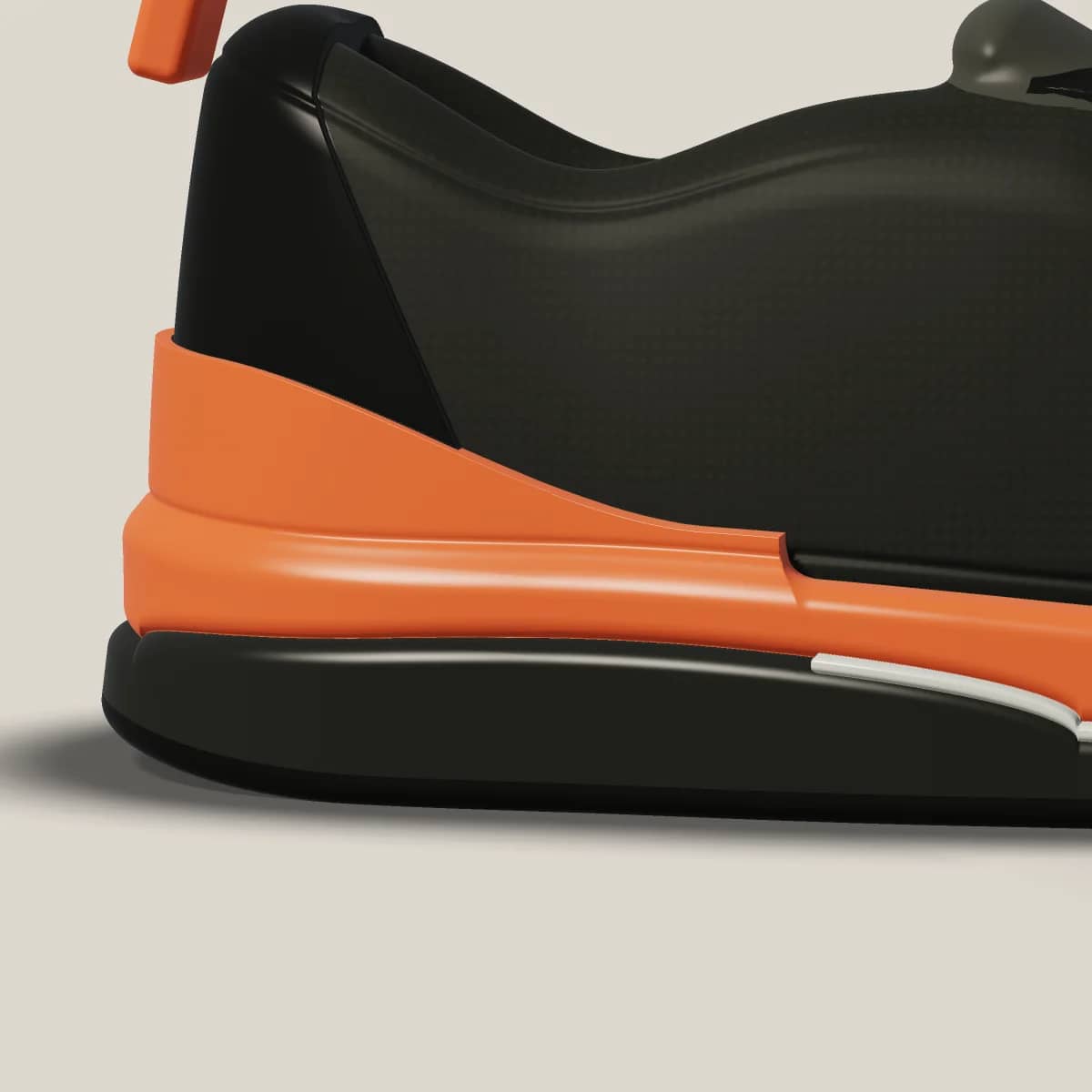
The midsole is two foams split along a curved line. The lower carrier is firmer and flat on the ground. The upper layer is softer and rises at the heel into a cradle that holds the foot without a separate plastic counter.
Where the two layers meet, the line lifts under the heel and dips under the forefoot. That curve gives the line its name, and it is the most recognisable detail of the A-01 profile.
VectorPlate: only at the midfoot
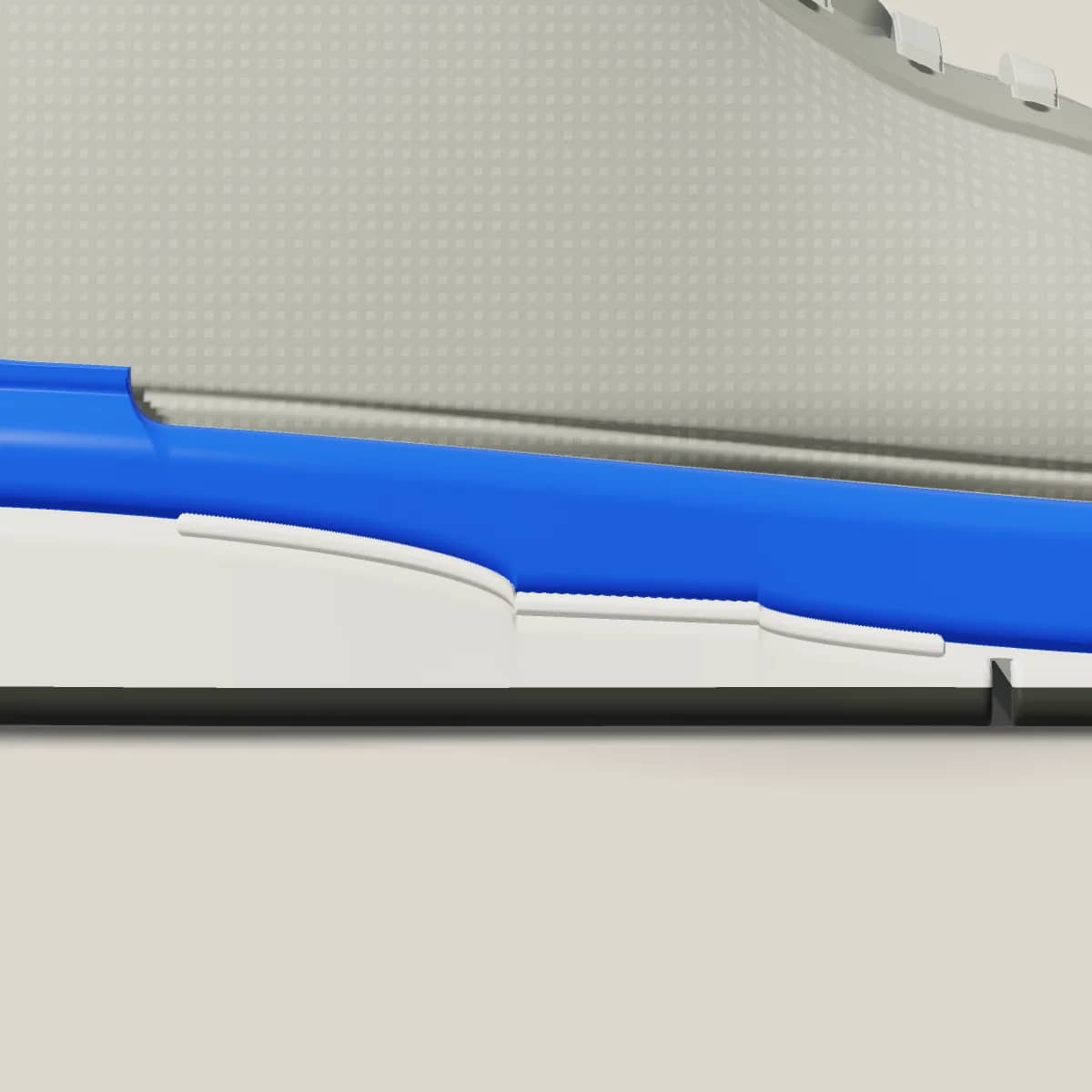
Between the two foams, through the midfoot only, sits a thin plate. It stops the sole twisting when you land on the edge of a step, and it ends before the forefoot so toe-off stays flexible.
StreetGrip 42: the last layer
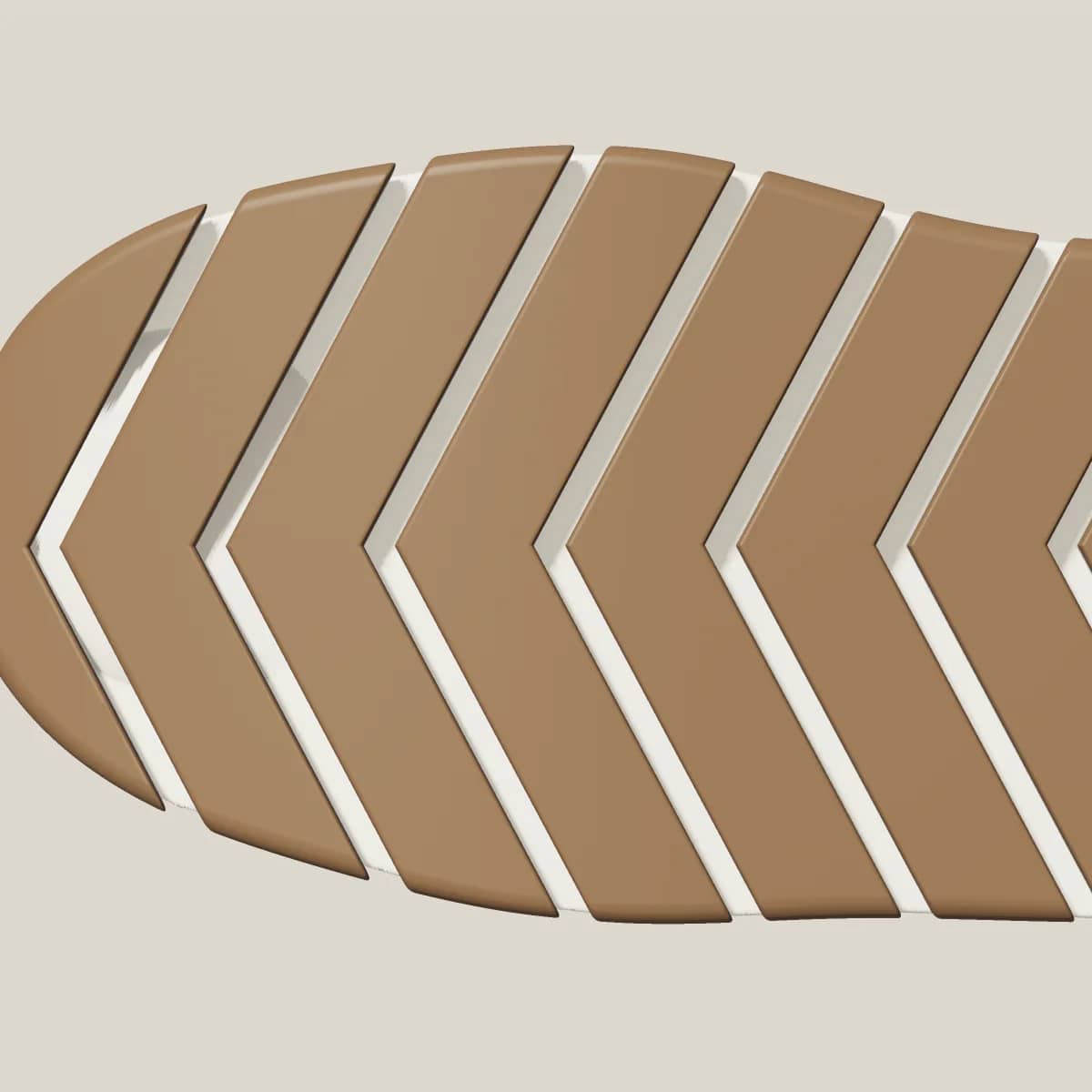
Every ANTEVRA model uses the same outsole rubber. What changes is the pattern: shallow flex channels on Transit and Studio models, deeper chevron lugs on Field models for wet stone and metal grating.
| Upper | GridWeave textile/synthetic |
|---|---|
| Midsole | DualArc, two densities |
| Plate | VectorPlate, midfoot only |
| Outsole | StreetGrip 42 rubber |
| Sample weight | 318 g, EU 42 |
| Drop | 8 mm |
Every layer does one job, and you should be able to see which job it is.
None of this is meant to be seen from across a room. From a few metres away A-01 reads as one quiet object. You see the layers when you look closely.